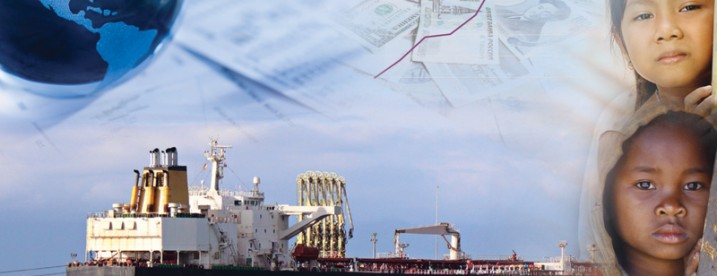
This December 2014 report from Global Financial Integrity, “Illicit Financial Flows from the Developing World: 2003-2012,” finds that the developing world lost US$6.6 trillion in illicit financial flows from 2003-2012, with illicit outflows alarmingly increasing at an average rate 9.4 percent per year.
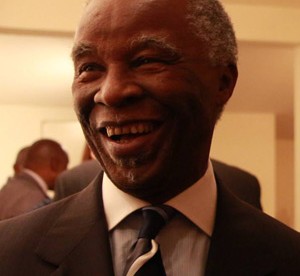
WASHINGTON, DC—Former President of South Africa Thabo Mbeki and members of the United Nations Economic Commission for Africa (UNECA) High Level Panel on Illicit Financial Flows from Africa (HLP) concluded their latest visit to the United States today. Chaired by Mr. Mbeki, the group met with government representatives, civil society experts, the business community, and journalists to continue promoting the HLP’s report and urging action to curtail illicit flows in Africa.
“Illicit outflows stemming from trade misinvoicing is the most damaging economic condition in Africa today,” said GFI President Raymond Baker, a member of the High Level Panel. “This is a key point in the HLP’s report, Track It; Stop It; Get It, and an argument that GFI has been making for years in our annual estimates of illicit outflows from all developing countries.”

This December 2015 report from Global Financial Integrity, “Illicit Financial Flows from Developing Countries: 2004-2013,” finds that developing and emerging economies lost US$7.8 trillion in illicit financial flows from 2004 through 2013, with illicit outflows increasing at an average rate of 6.5 percent per year—nearly twice as fast as global GDP.
Former President Continued Call on Africa’s and World’s Leaders to Prioritize Financial Transparency
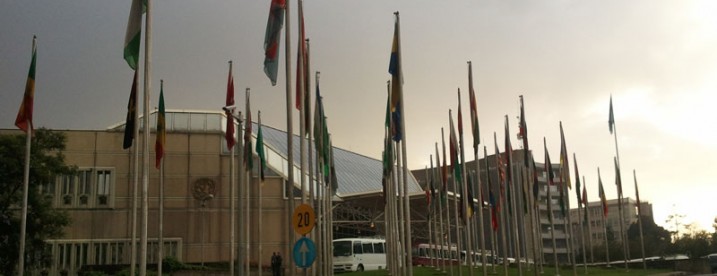
WASHINGTON, DC – Global Financial Integrity (GFI) welcomes the statements made yesterday by former South African President Thabo Mbeki on illicit financial flows at the third Financing for Development Conference. At an event in Addis Ababa, Ethiopia, Mbeki noted that in order to address the issue of illicit flows “there needs to be a concerted and sustained campaign around the world.” “The principle challenge we face” he said, “is one of implementation.” He expressed optimism about the impact the Financing for Development conference will have on illicit flows noting that there is “a common commitment” to address the problem “at a global level and at a national level.”
GFI Spokespersons Available for Comment and Updates on Financing for Development (FfD), Sustainable Development Goals (SDGs), Illicit Financial Flows, Trade Misinvoicing
ADDIS ABABA, Ethiopia / WASHINGTON, DC – The third Financing for Development Conference (FfD) will take place in Addis Ababa, Ethiopia, July 13-16, and Global Financial Integrity will be on the ground advocating for specific, measurable and achievable targets to significantly reduce illicit financial flows.
This process marks a momentous opportunity to create a sustained path for helping developing countries address the nearly US$1 trillion that flows out of their economies illicitly each year. Of that amount approximately $730 billion is moved offshore through trade misinvoicing (i.e. trade fraud). The related tax loss, coupled with the potential investment resources that are lost, represent significant costs to governance and development efforts in poor countries.
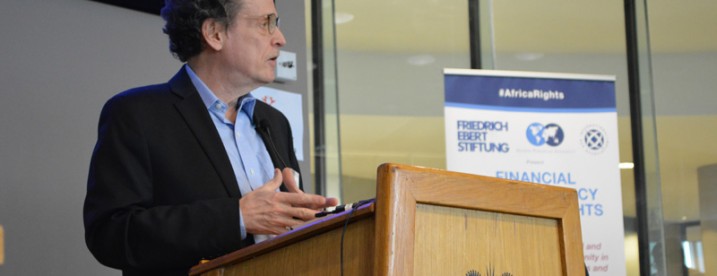
In May 2015, Professor Thomas Pogge delivered the keynote address at a conference, titled “Financial Transparency and Human Rights in Africa: Fostering Greater National and Regional Economic Opportunity in Africa through Human Rights and Financial Transparency,” co-hosted by Global Financial Integrity, the Friedrich-Ebert-Stiftung (FES), and the International Bar Association’s Human Rights Institute (IBAHRI) in Johannesburg, South Africa.
A member of GFI’s Board of Directors, Dr. Pogge is the Director of the Global Justice Program and the Leitner Professor of Philosophy and International Affairs at Yale University.
Game-Changing Recommendations Urge Institutionalization of Efforts to Combat Illicit Flows, Promote Financial Transparency
Mbeki-Led Group Also Calls for Public Registries of Beneficial Ownership, Public Country-by-Country Reporting for Multinationals
WASHINGTON, DC / ADDIS ABABA, Ethiopia – Global Financial Integrity (GFI) welcomed a new report from the African Union (AU) and United Nations Economic Commission for Africa’s (UNECA) High Level Panel (HLP) on Illicit Financial Flows from Africa as a game-changer in the movement to curtail illicit financial flows and promote financial transparency. Chaired by former South African President Thabo Mbeki, the HLP’s final report recommends putting efforts to curtail trade-related illicit flows—constituting the vast majority of measurable illicit financial flows (IFFs)—foremost in African and global efforts to curb the ongoing illegal outflow of African wealth.
By Joseph Spanjers, January 20, 2015
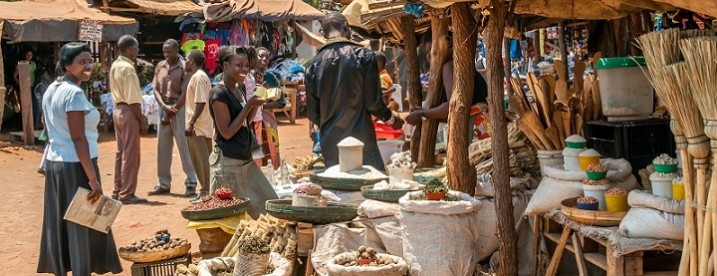
As a Percent of GDP, Sub-Saharan Africa Suffers the Largest Illicit Outflows of Any Region in the World
Global Financial Integrity’s (GFI) latest annual report on illicit financial flows–released just last month–estimates the volume of illicit financial outflows from the developing world from 2003 to 2012. It is the first report to estimate these flows for 2012, when they reached a record US$991.2 billion.
Already, this US$991.2 billion figure is being cited quite a bit; it is the main figure cited in many of the articles of we’ve seen on the report in the media. Take, for example, this story in The Guardian, this article from Reuters, or this piece in The Wall Street Journal. It’s the big, flashy, almost-trillion dollar number.
However, I’d like to draw your attention to a different figure, one that emphasizes even more clearly the implications of illicit financial flows on development: 5.5.
